
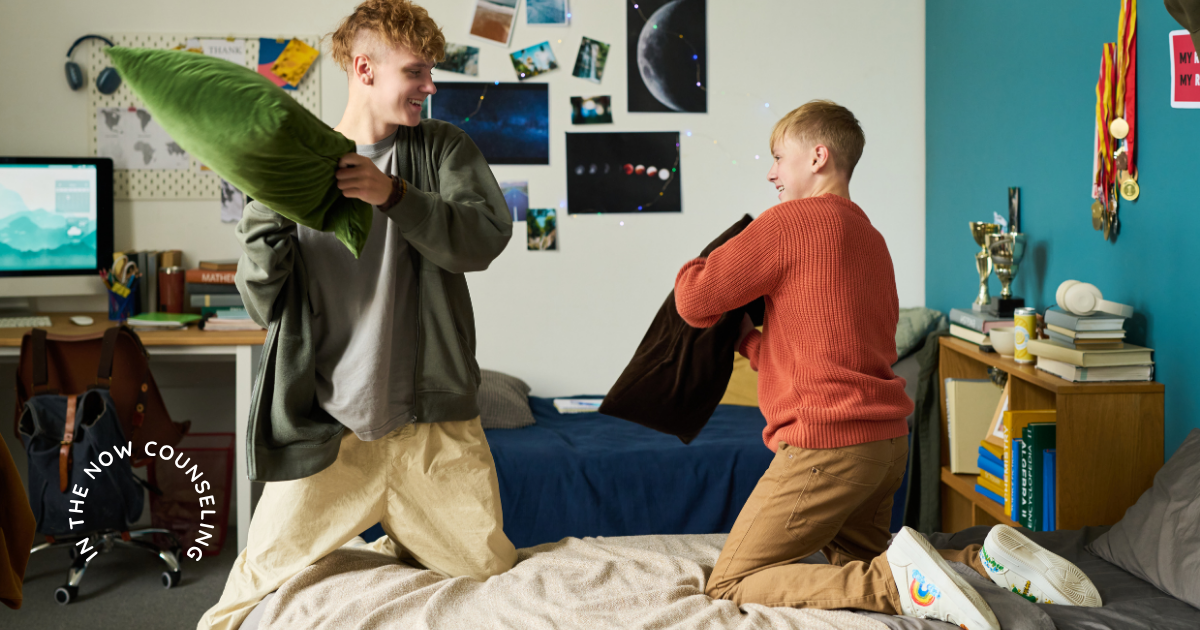
Are your kids fighting constantly this summer? Learn why siblings fight more during summer break and how parents can restore peace at home.
If it feels like your children can’t be in the same room without arguing lately, you’re not imagining it.
One minute they’re laughing together. The next they’re screaming over who looked at who, whose turn it is, or who got the bigger popsicle.
By July, many parents are asking themselves:
“Why are my kids fighting constantly?”
“Why can’t they just get along?”
“Did I do something wrong?”
Summer often brings out more sibling conflict—not because your children suddenly dislike each other, but because nearly everything about their daily lives has changed.
Understanding what’s happening underneath the fighting can help you respond differently—and know when it’s time to ask for extra support.
Summer Changes Everything
During the school year, siblings naturally spend time apart.
They have different teachers, classmates, activities, routines, and opportunities to recharge away from one another.
Then summer arrives.
Suddenly they’re sharing:
- the same space
- the same toys
- the same parent
- the same schedule
- the same boredom
…every single day.
Even siblings who genuinely love each other can become emotionally exhausted from constant togetherness.
It’s Usually Not About the Toy
In the summer, parents often try to solve whatever sparked the latest fight between the siblings.
The Legs, the tablet, the snack, the remote, and on and on it goes. But those things usually aren’t the real problem. They’re simply the trigger.
Underneath these sibling fights are bigger emotional needs:
- “I need attention.”
- “I’m overwhelmed.”
- “I need space.”
- “I feel left out.”
- “I don’t know what to do with myself.”
- “I’m frustrated and don’t have the skills to calm down.”
Children don’t usually say those words.
Instead…
They yell.
Push.
Grab.
Whine.
Tattle.
Or intentionally annoy each other.
Why Siblings Fight Constantly During Summer
There are several reasons siblings fighting during summer becomes so common.
1. They’re Together Too Much
Adults need breaks from people. Children do too.
Without school, camps, or structured activities, siblings may spend 10–12 hours together every day.
That lack of personal space slowly wears down everyone’s patience.
2. Their Emotional Cups Empty Faster
Summer often means:
- later bedtimes
- less predictable schedules
- inconsistent meals
- more excitement
- more stimulation
- less downtime
All of those make it harder for kids to regulate emotions.
Small frustrations suddenly feel enormous.
3. They’re Competing for You
Many parents notice their children fighting more when everyone is home together.
Sometimes what looks like sibling rivalry is actually competition for connection.
One child gets attention…
The other interrupts.
One child is praised…
The other starts acting out.
Negative attention still feels like attention to a child who’s craving connection. Negative attention is still attention.
4. They’re Bored
Boredom isn’t bad. In fact, it opens the door for creativity.
But boredom also creates opportunities for conflict.
When kids don’t know what to do, they often turn toward the person closest to them. Unfortunately for parents, that’s usually the child’s brother or sister.
5. Big Feelings Need Somewhere to Go
Children don’t always know how to express:
- disappointment
- jealousy
- frustration
- loneliness
- anxiety
- overwhelm
Those emotions often come in ways we don’t like to see – – Their sibling simply becomes the “safest” target.
What Actually Helps in Reduce Siblings Fight in Summer?
The goal isn’t to eliminate every sibling disagreement. Conflict is part of growing up. Children learn problem-solving, compromise, communication, and emotional regulation through conflict.
The goal is helping them recover from conflict in healthier ways.
Here are a few things that can reduce sibling conflict during summer:
Create Small Breaks From Each Other
Even 20–30 minutes apart can reset everyone’s internal system.
One child reads.
One colors.
One helps you cook.
Separate activities are healthy—not punishment.
If you’re feeling overwhelmed too, use those 20-30 minutes as “quiet time”. Everyone gets their own quiet activity – – even you!
Prioritize One-on-One Time
Children compete less when they feel emotionally connected.
Even ten uninterrupted minutes with each child can make a difference.
Connection fills the emotional tank that attention-seeking often comes from.
Build Predictable Routines
Summer doesn’t need to be scheduled every minute.
But predictable rhythms help children feel secure.
Simple anchors like:
- breakfast together
- outside time
- quiet time
- family dinner
reduce emotional stress.
Coach Instead of Referee
It’s tempting to decide who’s right.
But children also need help learning skills like:
- naming emotions
- calming their bodies
- taking turns
- solving problems respectfully
These skills take practice — not lectures. It’s okay to let kids work some of these conflicts out by themselves.
When Sibling Fighting Is Actually a Sign of Something Bigger
Sometimes constant fighting isn’t just typical sibling rivalry.
Sometimes it’s a signal that one or more children are struggling emotionally.
You may notice:
- explosive reactions over tiny problems
- frequent physical aggression
- intense anger
- constant irritability
- anxiety
- emotional meltdowns
- trouble calming down after disagreements
When emotional regulation is difficult, siblings often become the easiest place for those feelings to spill out.
The fighting isn’t the problem. It’s the symptom.
It’s Hard on Parents, Too
Living in constant conflict is exhausting.
Many parents feel like they spend the entire day:
- breaking up fights
- raising their voice
- feeling guilty
- wondering if they’re doing enough
- counting the house till bedtime
If that’s you, you’re not failing.
You’re parenting children whose emotional needs have increased while your own capacity is stretched thinner than ever.
You deserve support, too.
Therapy Can Help Families Find Peace Again
Sometimes families reach a point where they’ve tried everything…
- sticker charts
- consequences
- time outs
- talking
- ignoring
Nothing seems to change.
That’s often because the behavior isn’t caused by a lack of discipline.
It’s driven by emotions children don’t yet know how to manage.
Therapy gives children a safe place to understand their feelings, build emotional regulation skills, and learn healthier ways to communicate. Parents also gain practical tools that reduce daily conflict without feeling like they’re constantly yelling.
You don’t have to wait until things feel completely out of control.
Sometimes the best time to reach out is when you simply realize – – “I don’t want to feel like this anymore.”
You Don’t Have to Figure It Out Alone | Therapy in Canonsburg, PA
At In The Now Counseling, we help children, teens, and parents understand what’s really underneath challenging behaviors.
Whether your child is struggling with anxiety, regulating emotions, or frequent sibling conflict, therapy can help your family move from surviving the summer to actually enjoying time together again.
If your home feels tense, exhausting, or filled with constant conflict, we’re here to help.
More Support for This Season
If your child or teen has been struggling this summer, these articles may help you feel more supported and less alone:
Know the Signs of Anxiety in Kids That Often Look Like “Bad Behavior”
Why Your Anxious Child Often Seems Angry or Defiant
Why A Child’s Behavior Gets Worse in Summer (And What They May Actually Need)
How to Share the Mental Load with Your Partner During Summer Break


